

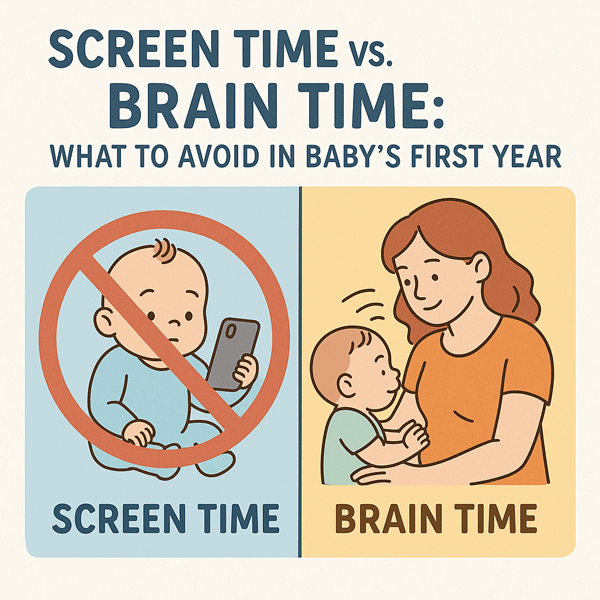
In today’s tech-driven world, screens are everywhere—from phones and tablets to TVs and smart toys. But what happens when your baby is exposed too early? Understanding the difference between “screen time” and “brain time” is crucial for every parent of a child under 2 years.
In this post, we’ll explore the negative effects of screen time on child development, the benefits of brain-building activities, and how to create a healthy environment for baby brain development during the first year.
🧠 Why the First Year Matters Most for Brain Development
A baby’s brain grows faster in the first year than at any other time in life—forming over 1 million new neural connections per second. During this time, your baby needs:
-
Face-to-face interaction
-
Physical touch
-
Verbal communication
-
Exploration of the real world
Screen time for babies under 1 interferes with these crucial developmental experiences.
⚠️ Negative Effects of Screen Time on Babies
While screens may seem harmless, studies show several risks:
-
Delayed speech and language development
-
Poor attention span
-
Less parent-baby interaction
-
Disrupted sleep patterns
-
Reduced emotional bonding
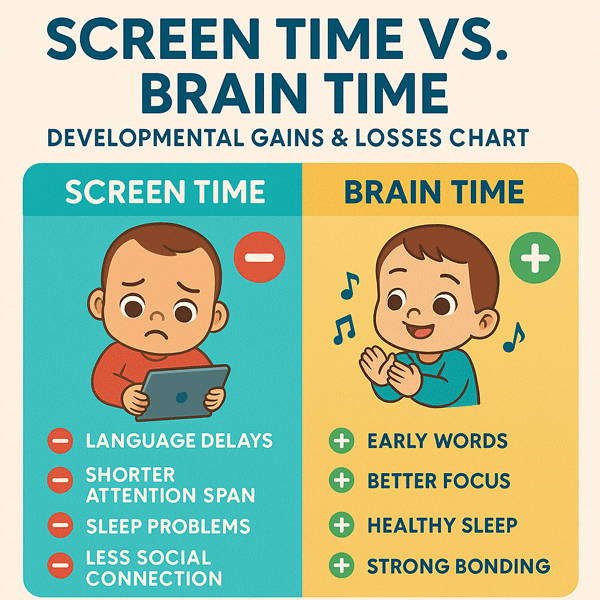
Screen Time vs Brain Time: Developmental Gains & Losses Chart
📺 What Counts as Screen Time?
Many parents are surprised by what counts this:
-
Watching cartoons or music videos
-
Video calls that aren’t interactive
-
Phones or tablets used to calm or distract the baby
-
Background TV (even if the baby isn’t directly watching)
🔍 Second-hand screen time in babies (when adults watch screens near a baby) also affects development due to lack of engagement.
✅ Safe Screen Time with Educational Value
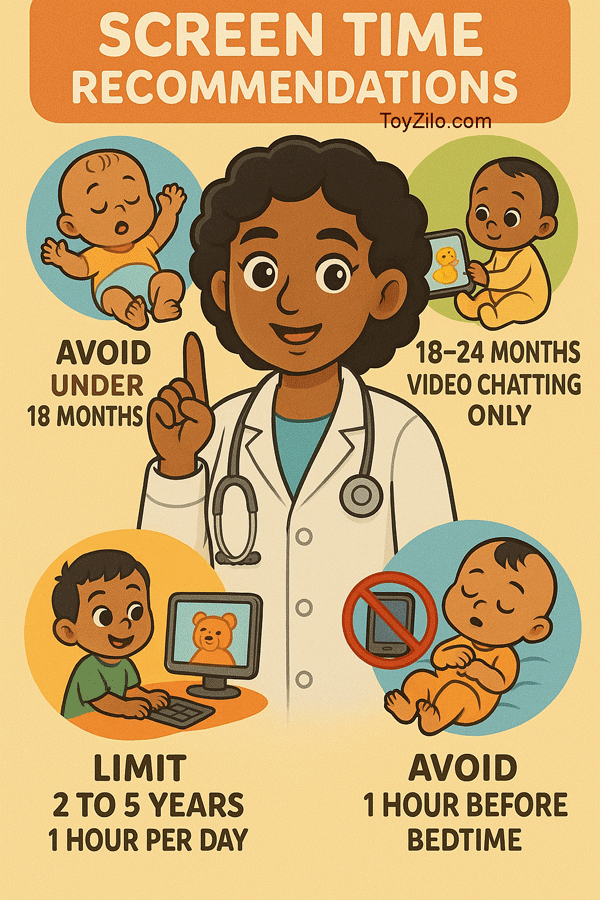
While pediatricians recommend zero screen time for babies under 18 months (except video chats), there are a few educational exceptions:
-
Video calls with family, when the caregiver engages the baby during the interaction
-
Interactive story apps only when co-viewed with an adult
-
Music and movement videos that are watched together and followed by real-life action (e.g., clapping, dancing)
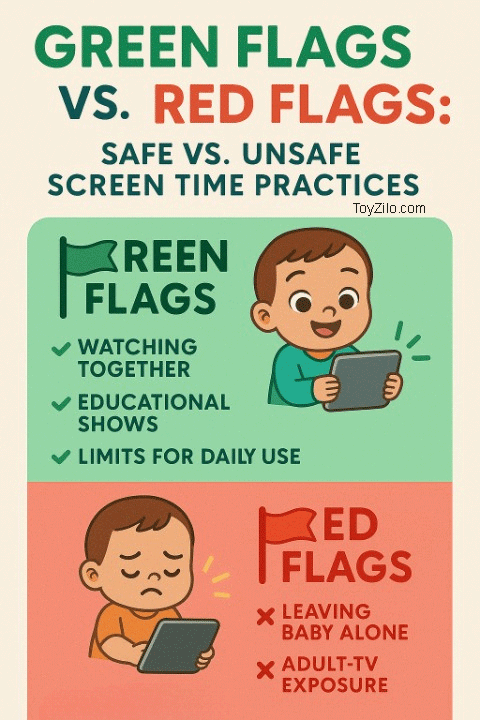
Green Flags vs. Red Flags: Safe vs Unsafe Screen Time Practices
🕒 Managing Screen Time for Kids Under 2
Here’s how to minimize screen exposure while maximizing developmental activities:
-
Keep screens out of baby’s play and sleep areas
-
Set a “no-screen” policy during meals and bonding time
-
Model good screen habits as adults
-
Redirect boredom with toys, music, or a walk outside
🎓 Brain Time: The Best Alternative
What’s better ? Brain time—real-world activities that build memory, focus, and emotional security:
| Age | Activity | Brain Benefit |
|---|---|---|
| 0–3 mo (New Born baby) | Mirror play | Visual tracking |
| 3–6 mo (Infant) | Tummy time toys | Motor coordination |
| 6–9 mo(Infant) | Peek-a-boo, object hiding | Memory & logic |
| 9–12 mo | Singing, baby books | Language foundation |
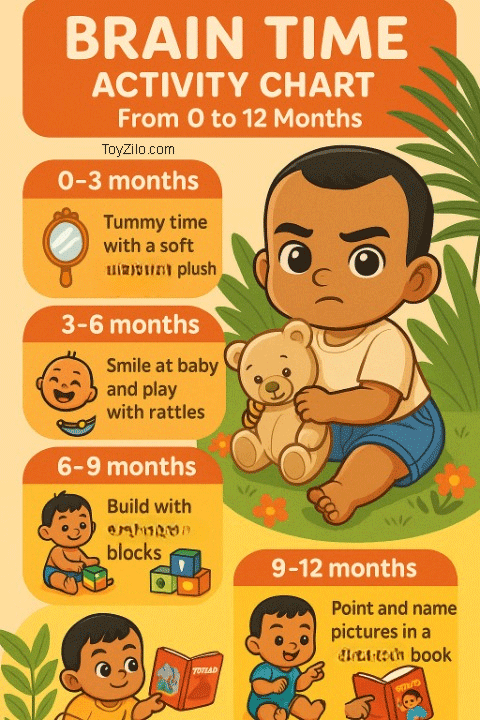
Brain Time Activity Chart: From 0 to 12 Months
🌿 What Experts Say
The American Academy of Pediatrics (AAP) recommends:
-
No screen time (except video chatting) for children under 18 months
-
Co-viewing and active interaction during all media use
-
Prioritizing “brain-building” play over digital exposure
🛡️ How to Create a Screen-Smart Environment at Home
-
Use baby-proof mirrors, rattles, and sensory mats instead of screen toys
-
Limit your own screen use around the baby—your interaction matters most
-
Schedule “unplugged” hours daily for play and bonding
-
Make outdoor time a part of the daily routine
📌 Conclusion: It’s About Connection, Not Distraction
In the first year, every moment your baby spends looking at your face, hearing your voice, or reaching for your hand builds the foundation for future learning. Screens can wait. Brain time is now.
✅ FREE Download: “Brain Time Activities vs Screen Time Chart” (Ages 0–2)
🔗 Subscribe to get weekly parenting tips, printable charts, and baby brain boosters straight to your inbox!